
External Affairs Minister S Jaishankar on Wednesday held wide-ranging talks with his Russian counterpart Sergey Lavrov focusing on the Ukraine conflict, bilateral ties and issues relating to the G20 foreign ministers' meeting.

7 key areas that the Budget must address to re-energise the infrastructure sector, suggests Vinayak Chatterjee.

Those hardest hit by the second wave of the pandemic have been blue-collared workers, doctors and healthcare workers, law and order and municipal personnel, individuals eking out daily livelihood, and small businesses. And there should be more measures taken to alleviate their pain, the Reserve Bank of India (RBI) said on Monday. The report also indicated that the RBI's growth numbers might have to be revisited as the central bank's real GDP growth projection of 26.2 per cent given in the MPC's resolution of April 7 for the first quarter of 2021-22, were "made before the full fury of the resurgence." Nevertheless, the "resurgence of COVID-19 has dented but not debilitated economic activity in the first half of Q1: 2021-22.

'The macro-economic stresses -- high interest rates, rupee depreciation and capital flows -- have receded now.' 'Interest rates have come down, inflation is down and the rupee has bounced back.' 'If oil prices continue at this level, there will be no vulnerability.' 'Growth is a different story.'

The economic think-tank in its earlier projection had suggested that the Indian economy was likely to grow at 5.7 per cent in 2014-15.

Policy discussions now should urgently focus on the road map for serious economic and institutional reforms to put India on a sustained high growth trajectory like the Chinese economy, says Jayanta Roy.

The 50-share NSE Nifty slipped below the 10,200-mark by falling 47.20 points, or 0.46 per cent, at 10,192.95 after hovering between 10,169.85 and 10,296.55.

Amid China's economic slowdown, the country's economic challenges may increase manifold and its economy may be hit harder in the wake of the Ukraine-Russia crisis.
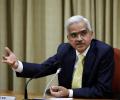
Reserve Bank Governor Shaktikanta Das on Wednesday said the country is at the doorstep of economic revival on the back of accommodative monetary and fiscal policies being pursued by the central bank and the government.

The proposal to increase public float, hike income tax surcharge, move to tax share buybacks and lack of stimulus to shore up economic growth has hurt investor sentiment.

Salaries in India are expected to increase by 9.5 per cent in 2024, slightly lower than the actual increase of 9.7 per cent in 2023, largely in response to market dynamics, according to global professional services firm Aon plc. According to the firm's annual salary increase and turnover survey 2023-24 India, that analysed data across 1,414 companies from almost 45 industries, salary increase in India seems to have stabilised at high single digits, after the post-pandemic high increments in 2022. "The projected increase in salaries in the Indian formal sector indicates a strategic adjustment in response to the evolving economic landscape.

A slowdown in India's growth rate, the bank said, has also affected the growth rate of South Asia. As a result, South Asia has fallen to second place after East Asia and the Pacific.

India may have to lean more on West Asian nations for supplies of liquefied petroleum gas (LPG), a cooking fuel, in the coming years after Indian state-run refiners drew up big plans to diversify into producing more profitable petrochemicals. This shift leads to reduced LPG output, Indian refining executives said. The mantra for state-run oil companies, from Indian Oil Corporation (IndianOil) to liquefied natural gas (LNG) importer Petronet LNG, which are looking to diversify their businesses from lower-margin fuels, has been value-added petrochemicals.

'With India's growing capabilities in the space sector, this creates promising opportunities for enhanced collaboration and market access.'

Events proved that on every count the RBI had accurately predicted both the damage and the lack of benefit. What the RBI was hiding was the fact that Modi had ignored its concerns -- all of which turned out to be true -- and gone ahead anyway, asserts Aakar Patel.

As US businessmen and investors await Prime Minister Narendra Modi's US visit, the investor community and the industry leaders said the success of 'Mangalyaan' goes on to prove India's growth story based on 'frugal innovations'.

This does not mean isolating parochialism but of new way of thinking about economic systems, says Rajni Bakshi.

Petrol and diesel sales in India jumped in September as economic activity picked up with the nearing festival season and the ending of the monsoon raised the demand, preliminary industry data showed. Petrol sales soared 13.2 per cent to 2.65 million tonnes in September when compared to 2.34 million tonnes of consumption in the same month last year. Sales were 20.7 per cent higher than Covid-marred September 2020 and 23.3 per cent more than pre-pandemic September 2019.

He said the government would not go in for providing stimulus across the board and that only specific sectors would be considered for the measure.

Principal economic advisor, Ila Patnaik, is coordinating the work on Economic Survey 2013-14.

An official announcement to this effect would be made next week. The vice-chairman would be of Cabinet rank.
Technology can play an important role in almost every sector of the economy in enhancing productivity and production.

Subramanian, a senior fellow at the Peterson Institute for International Economics in Washington, attended a news conference in New Delhi at which his appointment was announced.

'Without a poverty line, how are we to know whether poverty is the same, or it has come down or it has gone up?'

The Indian equity market clocked record average daily turnover (ADTV) in both the cash and derivatives segments in February amid a spike in volatility. The ADTV for the cash segment for both the exchanges combined came at Rs 1.27 trillion, while the same for the derivatives or the futures and options (F&O) segment stood at Rs 483 trillion in the previous month. The volumes for both cash and derivatives have almost doubled from a year ago on the back of rising retail participation in the world's fourth largest equity market.

Alleging that the Congress-led United Progressive Alliance government's mindset has led to "decay" of key institutions including Parliament, the Bharatiya Janata Party on Saturday said it poses a serious issue before the next Lok Sabha as it is threatening the survival of democracy in the country.


The Institute of Economic Growth also expected banks prime lending rates to decline to below 11 per cent in next few months which would further spur industry growth.

Among the Sensex firms, JSW Steel, Tata Steel, Tech Mahindra, Infosys, Wipro, Tata Consultancy Services, Nestle, HCL Technologies, HDFC Bank and Maruti were the major laggards. IndusInd Bank, ITC, Bharti Airtel and State Bank of India were among the winners.
Ahead of the Reserve Bank of India's Monetary Policy announcement, a leading economic thinktank said on Monday that lending rates might dip marginally in the coming months due to recent decline in inflation.

Market benchmarks gave up intra-day gains to close in the red for the sixth session on the trot on Friday, capping a bruising week which saw a massive dash for safety amid rate hikes by global central banks and fears of slowing growth.

Most analysts expect the note ban to sharply hit GVA growth in Q3 and Q4, and the central bank's stance is being called into question.

Indian Institute of Technology Madras (IIT Madras) said on Monday that it had raised the highest-ever corpus of annual funds for the institution, garnering Rs 231 crore from alumni, industry and individual donors for 2022-23 (FY23). Its funding increased 76 per cent year-on-year (YoY) compared to Rs 131 crore in FY22, according to data shared by the institute. The number of donors contributing more than Rs 1 crore increased 64 per cent YoY.

The report stated the 2013 land Act was a step forward.

The Indian financial services space seems to be in a sweet spot as foreign investors have made a net investment of Rs 14,205 crore ($2.1 billion) in the sector in November amid strong credit growth and manageable non-performing loan portfolio. The investment comes following a net withdrawal of Rs 4,686 crore from financial services stocks in October on account of profit booking. Overall, foreign portfolio investors (FPIs) have made a net investment of Rs 36,238 crore in the country's equity markets in November.

energy is India's binding supply-side constraint for inclusive growth.
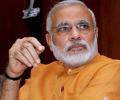
Modi's government plans to support domestic demand

In FY23, Indian operations accounted for 41.6 per cent of the consolidated revenue of India's top five multinationals, up from 34 per cent in FY18 and 33.2 per cent and 34.2 per cent in FY21.

India is likely to become a $40 trillion economy by 2047 -- a 13-fold jump from its current size -- driven primarily by a clean energy revolution and digitalisation, billionaire Mukesh Ambani said on Tuesday. Ambani's estimate for the Indian economy, currently the fifth largest in the world behind only the US, China, Japan and Germany, is more optimistic than Asia's richest man Gautam Adani, who last week stated that India will become a $30 trillion economy by 2050 on back of rising consumption and socio-economic reforms. "From a 3 trillion-dollar economy, India will grow to become a 40 trillion-dollar economy by 2047, ranking among the top three economies of the world," Ambani said at the 10th convocation of Pandit Deendayal Energy University in Gandhinagar.
